What are titanium glasses frames? Benefits of pure titanium eyewear
Titanium glasses frames are up to 40% lighter than standard metal frames, making them one of the lightest and most comfortable options available. Titanium is a widely popular premium metal for eyewear, offering high flexibility, durability, and ultra-lightweight performance. Pure titanium and beta-titanium frames are exceptionally comfortable for all-day wear. Thanks to vacuum IP plating, they are also corrosion-resistant and oxidation-resistant. Versatile enough for most settings, they are especially favored by fashion-conscious and business professionals alike.
What are acetate glasses frames? Lightweight & colorful eyewear
Acetate (cellulose acetate) is a plant-derived premium material widely used in mid-to-high-end optical frames — known for rich color options, a warm tactile feel, and excellent moldability. Acetate frames are crafted using a multi-layer pressing technique, allowing a single frame to display rich patterns such as gradients and tortoiseshell. After hand polishing, the surface reveals a natural luster that feels warm, not cold, to the touch. With moderate density, acetate frames resist deformation. Loved by those who value self-expression and style coordination.
Are acetate frame patterns unique? Why no two pairs are the same
Every pair of patterned acetate frames is one of a kind. The patterns on premium acetate frames are formed through natural penetration. Frames are cut from full acetate sheets, and each cut lands in a slightly different position — so even within the same tortoiseshell style, no two frames share the exact same pattern. Solid-color versions present a clean, uniform texture throughout.
How much do titanium and acetate glasses weigh?
All weight measurements refer to the frame only (lenses not included). Slight variations may occur due to different measuring equipment — this is normal and not a quality concern.
What do the numbers on my glasses frames mean?
All frames come with dimension markings. Due to the curved shape of eyewear and different measurement methods, a variation of 1–3 mm may occur. This is normal and not a quality concern.
Can I replace the lenses in Weartin frames?
Yes — every Weartin frame comes with transparent PC demo lenses (not applicable to sunglasses) that serve only as shape retainers and have no functional purpose. Minor scratches on demo lenses are normal and not considered a defect. When you visit a local optician for prescription lenses, the demo lenses will be removed and discarded.
What lens options are available for glasses? Blue light, polarized, photochromic & tinted
We offer four types of non-prescription lenses:
- Blue light and photochromic lenses: 1.56 index resin
- Tinted and polarized lenses: nylon
Do you sell prescription glasses online? Coming soon
We currently offer non-prescription lenses only — blue light, tinted, polarized, and photochromic. Prescription lenses are coming soon. Stay tuned for updates.
What are blue light glasses and do they work?
Blue light glasses filter harmful screen light to reduce eye fatigue and improve sleep quality — ideal for anyone who spends hours on digital devices. Made with 1.56 index resin and a blue-light-blocking coating that effectively filters harmful blue light emitted by electronic screens. The lenses have a very subtle warm tint that looks natural in everyday wear.
What are photochromic lenses (transition lenses)?
Photochromic lenses automatically darken in sunlight and turn clear indoors — one pair that works as both everyday glasses and sunglasses. Made with 1.56 index resin with built-in photochromic molecules. Indoors, they remain clear; upon exposure to UV light, they automatically darken. When you return indoors or step into a car, they gradually revert to clear. No need to switch back and forth.
What are tinted sunglasses lenses?
Tinted lenses reduce brightness and add a stylish pop of color to your everyday look. Crafted with a nylon base and a full-dip dyeing process that produces uniform color throughout the lens. Their primary function is to reduce brightness and provide basic sun protection, with an added fashion element. Available in a wide range of colors (gray, brown, amber, green, gradients, and more) — suited for daily commuting and casual wear.
What are polarized sunglasses and how do they work?
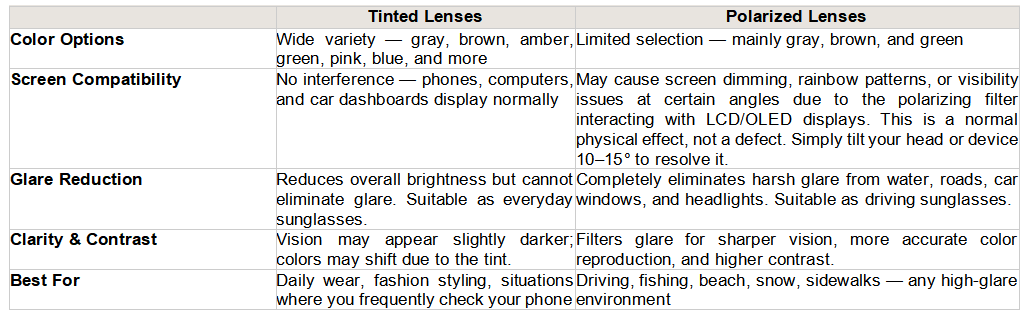
Polarized lenses eliminate harsh glare from reflective surfaces — making them the best choice for driving, fishing, and bright outdoor environments. Crafted with a nylon base and a built-in polarizing filter that eliminates glare reflected from flat surfaces such as water, roads, and car windows. Compared to tinted lenses, polarized lenses don’t just reduce brightness — they filter out harsh reflected light for a clearer, more true-to-life view with better contrast. Especially recommended for driving, fishing, snow sports, and other high-glare environments.
Polarized vs tinted sunglasses — which is better for driving?
Tinted lenses are best for everyday fashion and screen use; polarized lenses are best for driving and glare-heavy environments.
In short: Tinted lenses are great for everyday wear and fashion, with zero phone-screen interference. Polarized lenses excel in driving and bright outdoor settings by eliminating glare — but may cause rainbow patterns or dimming on phone screens, which is completely normal.
How to choose the right glasses frames for your face
Eyewear is also an accessory — ultimately, choose what you love. That said, here are a few practical considerations (unless you’re going for an oversized or ultra-slim look for fashion reasons):
First, choose a frame shape → then find your size → finally pick a color.
What glasses suit my face shape? A complete guide
Choose frames that contrast your face shape for the most flattering look. Whether rectangular, aviator, round, or browline — pick the one that matches your style and features.
For example, square or rectangular frames pair well with round faces, and vice versa. If you have an oval face, you’re in luck — it suits almost any frame style.
No single pair works for everyone. Different face shapes benefit from specific frame styles that best complement their features — and likewise, some styles are best avoided.
1. Square Face
Face width and length are nearly equal. Forehead, cheekbones, and jaw are similar in width. Characterized by strong angles, similar to a rectangular profile.
Recommended: Round or oval frames — their curves soften the angular features of your face.
Avoid: Square or sharply angular frames.
2. Round Face
Similar width and length to a square face, but with no angles — only soft curves. The goal is to create a more elongated look.
Recommended: Angular frames add definition. Square and geometric frames are great choices.
Avoid: Round or overly curved frames. Frames that are too small or too narrow can make the face appear rounder.
3. Oval Face
The easiest face shape to fit — naturally balanced proportions suit almost any frame style.
Recommended: Frames that are as wide as — or slightly wider than — the broadest part of your face to maintain that natural balance.
4. Oblong Face
Face length is noticeably greater than width, with a longer forehead or chin. Often accompanied by high cheekbones, a longer nose, and a prominent forehead.
Recommended: Wider and taller frames that draw attention to facial width and reduce the visual length.
Avoid: Narrow or small frames that may emphasize face length.
5. Diamond Face
Wider cheekbones with a narrower forehead and chin. The priority is to soften the prominence of the cheekbones.
Recommended: Round or oval frames to gently balance prominent cheekbones. Frames that are wider at the top and narrower at the bottom shift the visual focus upward — cat-eye and aviator frames work well.
Avoid: Sharply angular or narrow frames.
6. Heart-Shaped Face
Wider at the top, narrower at the bottom — broad forehead and cheekbones with a narrow chin. The goal: balance the proportions without over-emphasizing the forehead.
Recommended: Frames that add width to the lower face. Round or oval frames help soften the forehead’s angular feel.
Avoid: Heavily decorated top rims, such as browline frames.
How to read glasses measurements — lens width, bridge & temple explained
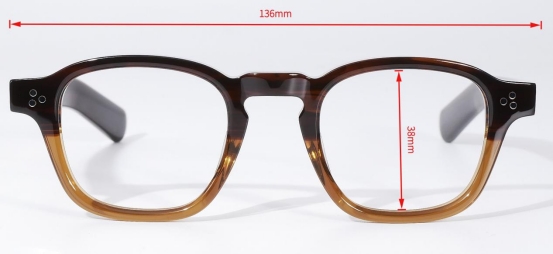
Frame dimensions are typically printed on the inside of the temple arm or behind the bridge. The numbers printed on your temple arms are factory data. Note: ① Part of the lens width is hidden inside the frame; ② Different measurement methods may result in a 1–3 mm variance. Please refer to our dimension diagrams as the primary reference.
One downside of shopping for glasses online is that no one is there to guide you through a fitting. But finding the right size isn’t difficult. Check or measure your current pair — those numbers will help you find a close match on our site.
Using this frame as an example: 
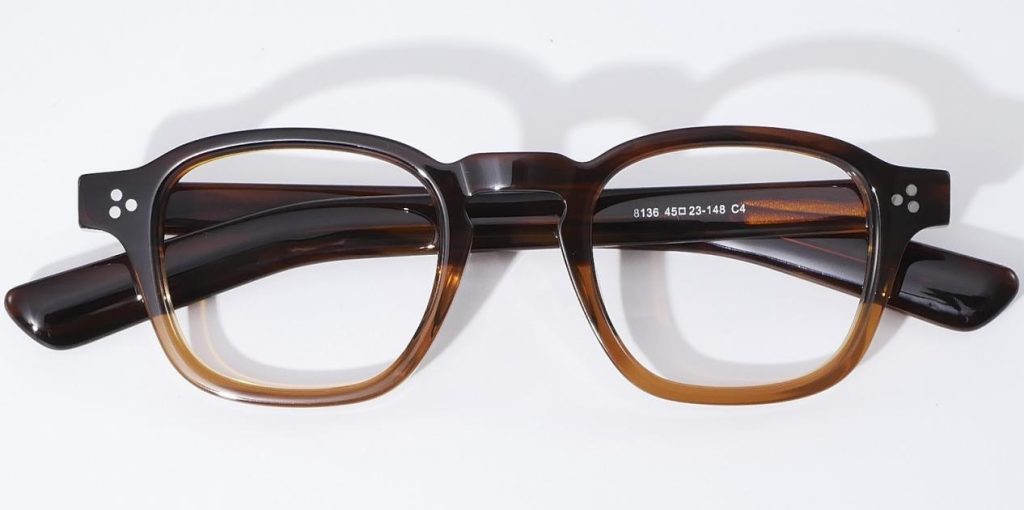
- 8136 = model number
- 45□23-148 = frame dimensions
- C4 = color code (can be ignored)
What does 45□23-148 mean? (Slight variations may occur due to different measurement methods)
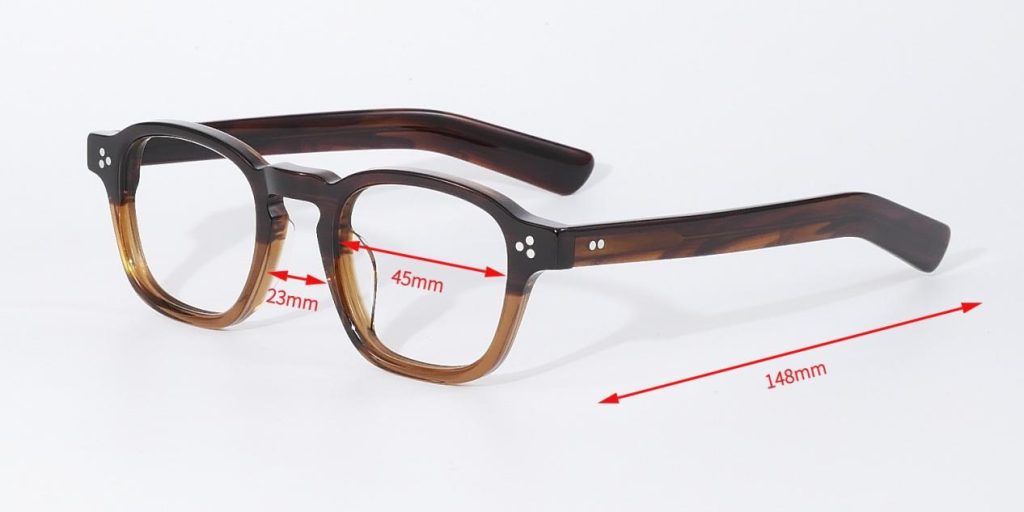
- 45 mm = lens width
- 23 mm = bridge width
- 148 mm = temple length
When choosing a frame, also pay attention to total frame width and lens height.
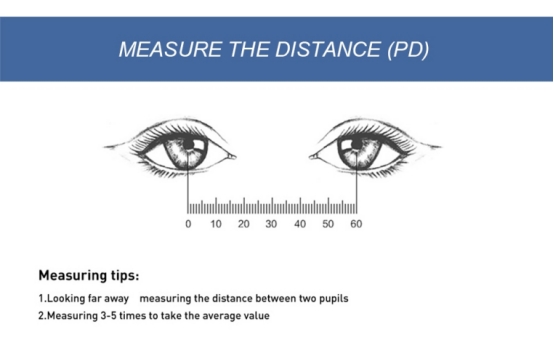
What is pupillary distance (PD) and how do I measure it?
Pupillary distance (PD) is the distance in millimeters between the centers of your two pupils — a key measurement for prescription lenses. You can have it measured at an eye clinic or optical store, or measure it yourself using online tools. Once prescription lenses become available, an accurate PD measurement will be required.